


Jason
November 8, 2026
For thousands of part-time Amazon sellers, finding profitable products isn’t just about skill—it’s about making every minute count. Smaller sellers also tend to use fewer time-saving tools: in the Seller Index 2026, sellers under $500K in revenue averaged 2.42 AI use cases against 3.67 for sellers over $5M (Marketplace Pulse). Limited hours mean that this gap matters. This limited time frame means that sellers must be laser-focused and efficient when conducting Amazon product research—the difference between profit and wasted effort often comes down to the tools and methods chosen.
Today, the demand for bulk Amazon product research tools that automate or accelerate the process has never been higher. Platforms like stage.analyzer.tools enable sellers to analyze thousands of products in minutes, freeing up precious hours. As automation becomes the new standard, the real challenge is knowing how to use these advancements strategically.
- Automation and efficient tools can drastically reduce your research workload each week.
- Reverse sourcing and competitor analysis are proven ways to identify profitable products faster.
- Compliance with Amazon rules is essential for long-term business success and seller account safety.
- Compare bulk tools like stage.analyzer.tools, Helium 10, and Jungle Scout for best results.
- Ongoing research and learning give part-time sellers a continual edge in the marketplace.
Why Time-Efficient Product Research Matters for Part-Time Sellers
Product research is the backbone of any successful Amazon business, but for part-time sellers, the stakes are even higher. With limited hours, every inefficient workflow or manual task can add up to missed opportunities and lost revenue. Sellers who automate research spend far less time on manual work, and adoption is high: 83.4% of marketplace sellers use AI somewhere in their operations (Marketplace Pulse Seller Index 2026).
This shift is driven by a growing trend among part-time sellers to adopt AI-powered research tools and automated platforms, making time efficiency a top priority.When your time is limited, every research shortcut matters.
This is why FBA product research for busy sellers and smart Amazon product research strategies are no longer optional—they are essential. Efficient research not only saves time but also reduces risk, as sellers can more quickly identify profitable, compliant products and sidestep common pitfalls. As one part-time seller shared in an industry interview, "I went from spending 10 hours a week on research to less than three, just by using automation tools and setting up my workflow right".
The Fastest Ways to Identify Profitable Products (Without Wasting Hours)
The most successful part-time sellers rely on proven, time-saving tactics to zero in on winning products. Here’s how you can do the same:
- Quick View Analysis: Use browser extensions or research tools that display key product metrics—such as sales rank, estimated revenue, and competition—right on Amazon search pages. This allows for instant filtering without clicking into each listing.
- Reverse Sourcing: Instead of guessing what might sell, start with supplier catalogs and cross-reference them with Amazon’s best-selling items. Tools like stage.analyzer.tools and Helium 10 automate this process, matching thousands of SKUs in minutes.
- Competitor Monitoring: Set up alerts or tracking for top competitors’ new product launches and price changes. This method identifies market gaps and trending products efficiently.
- Automated Keyword and Trend Analysis: Leverage platforms that scan for trending keywords and products, delivering suggestions based on real-time data.
For sellers with limited budgets, targeting niche products or higher-priced items can lead to greater profit margins and require fewer sales to reach revenue goals.
Sellers leveraging these strategies—and particularly those who automate at least part of their research—see product research times drop significantly compared to manual-only workflows.
For a complete breakdown of product research basics, see our Amazon Product Research 101: What It Is and Why It Matters guide.
Top Tools and Automation Solutions for Part-Time Sellers
When every hour counts, choosing the right software can make all the difference. Here’s a closer look at the best Amazon product research tools for part-time sellers, with an emphasis on automation and bulk analysis:
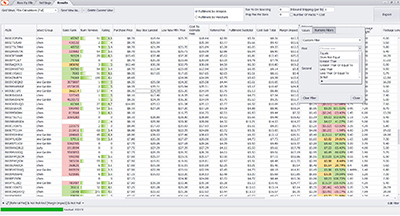
1. stage.analyzer.tools: For sellers managing large product lists, stage.analyzer.tools is a massive upgrade. Its unique ability to handle up to 1,000,000 SKUs per hour sets it apart, providing over 75 data metrics per product for instant, bulk analysis. Time-saving features like automated IP alerts, reverse sourcing, and direct integration with supplier spreadsheets mean part-time sellers can process and validate opportunities at scale.
2. Helium 10: Known for its comprehensive tool suite, Helium 10 offers Black Box for product discovery, Xray for real-time Chrome extension data, and Magnet for keyword research. Recent company data indicates users report a significant reduction in research time using their automation features.
3. Jungle Scout: A favorite for its Opportunity Score metric and robust product database, Jungle Scout helps part-time sellers quickly assess product viability.
4. AMZScout: AMZScout’s Product Score and Chrome extension enable rapid analysis of profitability, competition, and trends—ideal for sellers with limited time.
5. SellerApp: With powerful analytics, competitor tracking, and workflow automation, SellerApp helps streamline research and offers actionable insights for both new and experienced sellers. SellerApp’s analytics make it easy to track review trends and spot gaps in customer satisfaction, helping sellers optimize products even after launch.
For a deeper dive and more comparison points, see our Best Amazon Seller Tools for FBA roundup.
Bulk product research often requires converting product identifiers for better compatibility between different supplier lists and Amazon. If you need to convert between ASIN and UPC/EAN codes for bulk listings or analytics, stage.analyzer.tools also offers a free ASIN to UPC/EAN converter—a must-have for high-volume sellers looking to streamline analysis and save time on data preparation.
For sellers seeking alternatives to mainstream research tools with expanded features, you can explore our detailed comparison of Scan Unlimited alternatives. This guide is especially useful if you're investigating tools that support advanced bulk analysis, specialized metrics, or additional automation options.
Case Studies & Real-World Wins—How Part-Time Sellers Maximize Results
Real-world results speak volumes about the impact of automation and efficient research strategies.
Outsourcing Routine Tasks:
A part-time seller can hire virtual assistants (VAs) to manage inventory and optimize listings, which frees up personal time for sourcing and research.
Automated Advertising:
Automating advertising and keyword management can save hours every month. That matters because 46% of sellers cite advertising spend as a primary margin concern in the Seller Index 2026 (Marketplace Pulse).
Rapid Launch with Limited Capital:
Starting small works when research focuses on moderate-competition, high-demand products, because a modest first order lets you test demand with limited capital before scaling.
Product Listing Optimization:
Collaborating with experts on keyword research and listing optimization can improve visibility and conversion rates, even for an individual seller.
As experienced Amazon seller puts it, “The more you know, the less of a risk you are taking.” This reinforces the value of thorough market research, even for sellers with limited time.
For more details on bulk product analysis strategies, visit Bulk FBA Analysis on a Budget: Strategies for Finding Winners Fast.
Staying updated with the latest Amazon statistics can help part-time sellers spot market shifts and adjust sourcing strategies. Analyzing trends year-over-year is especially important when using bulk research tools like stage.analyzer.tools, as changes in buyer behavior or competition can alter which products are most profitable or compliant in the current landscape.
Common Pitfalls and Myths About Product Research Efficiency
Even experienced sellers can fall for common myths—often at great cost.
- Believing “any product can succeed” leads to wasted investments in saturated niches.
- Assuming that “high sales guarantee high profits” without factoring in costs and competition.
- Treating product research as “set and forget” in a constantly shifting marketplace.
It’s a common misconception that initial success will continue without ongoing analysis or process updates.
Skipping research isn’t a shortcut—it’s a risk that can cost you both time and money. For an in-depth look at what to avoid, see Common Mistakes Beginners Make in Amazon Product Research or explore our Amazon seller web app to streamline your workflow.
Best Practices and Compliance—Staying Efficient and Safe
Compliance and smart process design are essential for long-term Amazon success. As Amazon’s Dharmesh Mehta noted, new AI and automation tools like “Amelia” are being introduced to give sellers their own personalized experts, streamlining everything from sales metrics to inventory (Reuters).
Be aware that certain product categories require explicit Amazon approval before listing. Overlooking these requirements is a frequent cause of account suspensions for new and part-time sellers.
Key practices for part-time sellers:
- Always use reliable research tools to analyze market demand, competition, and profitability.
- Stay updated on Amazon’s restricted brands and compliance policies; failing to do so can lead to listing removal or account suspension. For more, see Amazon Restricted Brands Explained: What You Can and Can’t Sell.
- Monitor customer feedback to identify improvement opportunities and maintain high ratings.
Staying compliant isn’t just about avoiding penalties—it’s about building a sustainable Amazon business.
Conclusion: The Path Forward for Time-Constrained Amazon Sellers
Mastering Amazon product research is about working smarter, not longer. The right strategies and tools can turn a few spare hours each week into a source of real profit and growth.
As demonstrated by industry case studies, part-time sellers who adopt automation and efficient processes often outperform those with more time but less focus.
Efficiency isn’t just an advantage for part-time sellers—it’s the secret to long-term success on Amazon.
To take the next step in maximizing your margins, explore our guide on how to maximize profits with a free FBA calculator.
Participating in Amazon seller communities and ongoing education can provide timely tips and keep you ahead of marketplace changes.
If you're interested in leveling up your wholesale sourcing and product research, stage.analyzer.tools is purpose-built to meet the needs of busy Amazon sellers. Whether you manage massive supplier price lists or just want more accurate insights into what sells well, the platform’s bulk analysis, compliance tools, and advanced metrics can help you make profitable decisions in less time. Start your research journey and see the difference efficiency makes.
FAQ
How does stage.analyzer.tools help part-time Amazon sellers save time?
stage.analyzer.tools automates the bulk research process, scanning up to 1,000,000 SKUs per hour and providing actionable data—including profit margins, estimated sales, and IP alerts—for every item in your supplier list. This means you spend less time manually checking products and more time on decision-making and selling.
What’s the main advantage of using bulk Amazon product research tools?
Bulk Amazon product research tools speed up analysis by processing thousands (or millions) of products at once, surfacing which items are both profitable and in demand on the Amazon marketplace. This level of efficiency is especially valuable for B2B sellers who deal with extensive catalogs or tight schedules.
Is there a learning curve for new users of stage.analyzer.tools?
stage.analyzer.tools is designed to be user-friendly for Amazon sellers at all levels, with cloud and desktop options, custom filters, and helpful charts. Most new users can upload supplier lists and interpret the results with minimal training thanks to the intuitive interface and support resources.
Can stage.analyzer.tools help with compliance and restricted brands?
Yes, the platform offers Amazon restricted brand alerts that flag products associated with known restricted brands or recent IP complaints. This helps you avoid accidental listing violations—which is an important step in protecting your Amazon seller account.
Where can I learn more about changes in Amazon's policies and fees that impact bulk sellers?
To stay updated on policy and cost shifts, check out our article on how tariffs are transforming Amazon FBA costs. This can help you better plan your bulk sourcing and pricing strategies.