


Jason
November 9, 2026
Independent sellers now account for roughly 61% to 62% of the units sold on Amazon (Marketplace Pulse), so much of the competition for visibility and profit comes from other independent sellers. That highlights both opportunity and risk for entrepreneurs looking to launch or scale their business on the platform.
For sellers, the biggest threat isn’t just finding a product to sell—it’s inadvertently entering an Amazon niche saturation scenario, where the market is crowded and profit margins quickly erode.
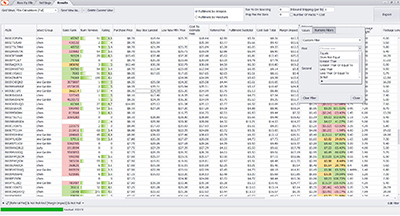
That’s why using advanced Amazon product research tools and focused Amazon market analysis is essential. With platforms like stage.analyzer.tools, sellers can analyze bulk product lists, screen for profitability, and avoid the costly trap of oversaturated niches before making major inventory decisions.
What “Niche Saturation” Really Means on Amazon Today
Niche saturation on Amazon describes a market condition where the demand for a specific product is fully met by a large pool of sellers, often resulting in intense price competition, high advertising costs, and shrinking returns.
This is especially clear in categories like Home & Kitchen, which tends to host a very large number of active sellers.
Here’s what Amazon market saturation indicators look like today:
- A high number of sellers offering nearly identical products.
- ⭐ Products with hundreds or thousands of reviews, making it hard for newcomers to gain traction.
- Decreasing price trends and costly pay-per-click (PPC) advertising battles
Cutting corners on research or jumping into crowded markets is a formula for frustration.
Instead, successful Amazon FBA product selection now depends on identifying unsaturated opportunities where real customer needs remain unmet.
Additionally, regulatory requirements or strong seasonality can further limit success in crowded categories.
For more perspective on marketplace trends, see our insights on Amazon Statistics.
How to Spot—and Avoid—Oversaturated Niches Before You Invest
Pro Tip: Avoiding saturated markets on Amazon begins with a proactive, step-by-step research process:
- Analyze the Competition: Use top Amazon product research tools like stage.analyzer.tools, Helium 10, and Jungle Scout to check the number of sellers, review counts, and sales trends for your target product. For example, if you notice hundreds of sellers in the “Electronics” category and listings with thousands of reviews, that’s a major red flag. Review competitor feedback to uncover gaps or pain points not yet solved by existing products.
- Check Sales Volume and Trends: Evaluate whether demand is steady or declining. High sales volume with stagnant or falling prices often signals saturation.
- Evaluate Keyword Difficulty: Use Amazon keyword research tools to see whether ranking for main product terms is realistic. Look for long-tail keywords with healthy search volume but fewer competing listings.
- Assess Sales Rank Metrics: Monitor Amazon sales rank metrics over time—volatile or dropping ranks can indicate oversupply.
- Target Micro-Niches: Instead of generic categories, explore more focused opportunities. Target micro-niches—for example, selling portable, eco-friendly products rather than generic alternatives. Our Micro-Niche Mastery guide explains how sellers are winning by specializing in eco-friendly or uniquely bundled products.
By using multiple research tools, sellers can validate their choices before investing and avoid expensive missteps.
Micro-Niches, Bundling, and Other Strategies to Stand Out
To succeed in an era of Amazon niche identification and strong competition, standing out is essential. Sellers who focus on micro-niches, creative product bundling, or trends like sustainability are consistently carving out profitable spaces.
- Micro-Niches: Instead of selling generic yoga mats, a seller could pivot to eco-friendly and portable versions, targeting customers who value sustainability and convenience.
- Product Bundling: Another seller could bundle a coffee grinder with premium beans, creating a value proposition that stands out in a saturated kitchenware market. Bundling complementary items can also increase perceived value while reducing direct price comparison.
As Amazon product trends change, it’s the sellers who differentiate and innovate that consistently outperform those stuck chasing crowded, “me-too” products.
Sustained adaptation and product improvements are key to long-term success.
Common Pitfalls—Why Most Sellers Fail in Oversaturated Markets
Why do so many sellers struggle—even after doing their homework? The answer often lies in ignoring the warning signs of saturation and underestimating the financial risks.
The infamous fidget spinner craze of 2017 is a cautionary tale: thousands of sellers rushed in, only to see price wars, mounting Amazon fees, and unsold inventory as the trend collapsed almost overnight.
Price wars often force sellers into unsustainable profit margins, leading to early exits from the market.
Similarly, the “Electronics” category remains one of the most competitive on Amazon: Amazon itself accounts for about 32.1% of U.S. electronics spending, and thousands of sellers vie for attention (sources on our Amazon Statistics page).
Many Amazon sellers fail because they enter oversaturated niches where standing out is nearly impossible. When top sellers dominate with thousands of reviews and identical products flood the market, high PPC costs make profitability unsustainable.
High PPC advertising costs and aggressive price competition can quickly erode margins—especially for newcomers.
Key Takeaways—How to Future-Proof Your Amazon Business
Key takeaway: The path to success on Amazon is about strategy, not shortcuts. Sellers who conduct thorough market research, embrace Amazon FBA product selection best practices, and continuously differentiate their offerings are far more likely to thrive.
| Success Factor | Why It Matters |
|---|---|
| Market Research | Avoids saturated niches and identifies unmet needs |
| Product Differentiation | Stands out from competitors and avoids price wars |
| Continuous Innovation | Keeps your business resilient as trends shift |
Sellers who succeed protect their margins, and that is far more achievable when you avoid saturated markets and focus on innovation.
Continuous innovation, data-driven Amazon seller strategies, and smart use of research tools will keep your business resilient—regardless of how the marketplace changes.
Don’t forget to optimize your listings with our Step-by-Step Guide to Back-End Keywords.
Regularly reviewing Amazon’s restricted product list and policy updates can help avoid unexpected listing removals.